 K–5 Lesson
Teacher's Guide
A Shabbat Table
A weekly day of rest, seen through a family meal · Grades K–2
K–5 Lesson
A family meal is familiar to most young children. Shabbat, the Jewish day of rest each week, is a good first window into Jewish life precisely because it happens at a table, with bread and candles and family, familiar to most children. Showing a child a Shabbat table is showing them something ordinary and human: a family pausing together at the end of a week. The unfamiliar words arrive wrapped in a familiar scene. For the students, the lesson is simply: here is one special meal a Jewish family shares every week, and here is what is on the table.
The idea a child should leave with: A culture that makes rest a rule, not a reward: one day in every seven set aside to stop, slow the mind, and be with family and friends, with the week shaped around honoring it. Most children know what a busy week feels like; this is one people's answer to it.
Students learn that Jewish families set aside one day every week, called Shabbat, to rest and be together, and that it begins with a special Friday-evening meal that has a few familiar parts: candles, bread, and family. By the end, a student can name what goes on a Shabbat table, say what Shabbat is for, and tell one surprising fact about it: it starts when the sun goes down, so it starts at a different time every week.
Before class: put a braided loaf in a clear bag (any braided bread works; the bag stays sealed and no one eats it), set it in a basket or on a plate, and cover it with a cloth. Keep two unlit candles and a cup within reach. The steps below run 34 to 35 minutes.
Set the covered basket where every child can see it. Say: "Something is hiding under this cloth. It is soft. It is braided like hair. In many Jewish homes it sits on the table every single Friday night. Three guesses." Take the three guesses, then lift the cloth. Pass the bagged loaf around the circle: "Feel how soft. Count the braids." When it comes back to you: "This bread has a name: challah. HAH-lah. Say it with me. This Friday, when the sun goes down, it will be on thousands of tables. Let's find out why."
Hold up each object as you talk. This script carries the explanations in teacher language; put them in your own words, but keep "many families" and "often" in them, because practice varies from home to home.
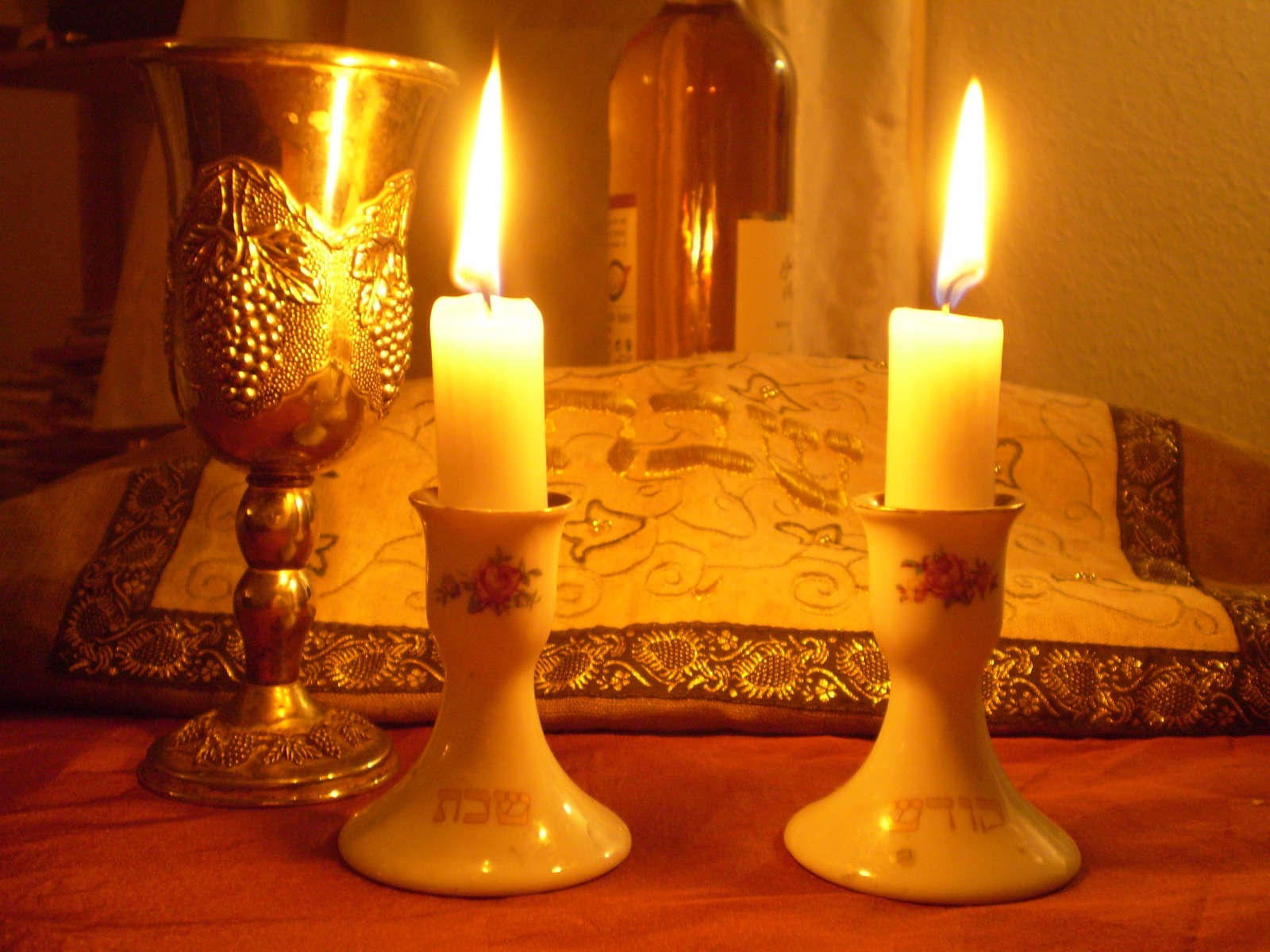
The candles. "In many Jewish homes, a grown-up lights two candles on Friday evening, just as the sun goes down. The light says: the busy week is over and the day of rest has begun. Why two? Tradition gives the pair two jobs, remembering the day and keeping it."
The challah. "This soft bread is braided like hair. Many families put two loaves on the table, not one. An old story tells of people long ago gathering a double share of food the day before the rest day, so no one had to gather any on it. The two loaves remember that story."
The cup. "Before the meal, a grown-up says a short blessing over a cup of grape juice or wine. It marks the day as special and different from the busy week. Then the meal begins." Describe the blessing; do not say it.
The people. "The most important part of the table is not on the table at all. It is the people around it. Families cook a nice meal and the whole family eats together. One plate for each person."
The little caps, when the handout comes out or if a child asks: "Some of the people in the picture wear a small cap called a kippah, kee-PAH. Some people wear one all day; some wear one for meals and prayers. It is a sign of respect. Many Jewish families do not wear them, and that is fine too."
Ask: "Does your family have a meal where the whole family sits down together? When?" Take a handful of answers and write them on the board as a chart: Sunday dinner, a holiday dinner, a New Year feast, the evening meal that ends a day of fasting in Ramadan, a birthday. Three columns: Who comes? What is on the table? How often? Then add the Shabbat column from the objects on the table: the family, candles, challah, a cup, and, in the last column, "every Friday evening." Let the children see the difference themselves: most special meals come once a year; this one comes every week.
Two facts children like. "In many Jewish families, phones and screens go off for the whole day. A whole day. And because Shabbat starts when the sun goes down, it starts at a different time every week: in winter before dinner, in summer after some of you are already asleep."
Hand out the Set the Shabbat Table sheet. The family is drawn and the table is empty. Along the bottom runs a dotted strip with five pieces: two candles, a cup, a braided challah, and a plain rectangle that becomes a challah cover. Children cut the pieces out, glue the candles, the cup, and the challah onto the table, decorate the cover with any pattern they like, and glue only its top edge over the challah so it lifts like a little door, the loaf hiding underneath just as it hid under the cloth. Then they draw a plate for each person (whether the dog gets one is up to them) and color the whole picture.
K: before class, cut the strip into its five pieces, or snip the first inch of each dotted line so children can tear the rest. An adult helps glue the cover's top edge. Grades 1–2: children cut on their own; show the cover trick once at the board before they start.
Hold up a finished table from the craft beside the chart on the board. "Look at the chart. Many families have a meal where everyone stops and sits down together. Jewish families have one every week, on Friday evening, and this is what is on the table." Then go around the circle: "What is the meal your family gathers for?" One answer each, and end on the last answer. On the board, for the children who can read it: Shabbat is one day every week to stop, slow down, and be with the people you love.