

The Jewish story inside the history students already learn.
Following one people from the ancient world to today gives students a fuller picture of the eras they already study: how empires governed, how faiths and states decided who belongs, and how a hatred was built and written into law.
Hatred has a history. Those who learn it can recognize it.
For classrooms, communities, and anyone who wants to know this history.
Classrooms
Teachers in public and private schools, from kindergarten through college, with ready-to-teach lessons that drop into the courses they already teach.
Anyone confronting antisemitism
Professionals and community members who need to understand this history and recognize antisemitism in schools, workplaces, and public life.
School leaders
Superintendents, principals, deans, and curriculum directors who want to close the gap with richer lessons that fit the courses schools already offer.
Communities
Libraries, museums, community centers, houses of worship of every faith, interfaith groups, and adult learning programs.
Lifelong learners and families
Anyone curious about Jewish history, reading at their own pace, and families learning together at the kitchen table.
Israel trips and new arrivals
Groups preparing to visit, and programs welcoming new arrivals, can learn the history of the land and its people.
Free and open to anyone who wants to learn. Dedicated paths for students, teachers, and campuses.
The Holocaust is taught.
What came before it,
and after, rarely.
Taught on its own, the Holocaust begins in 1933, as if hatred appeared from nowhere, and ends in 1945, as if the story simply ended. Its reach is often lost too: it extended far beyond Nazi Germany, across occupied and allied Europe and into North Africa and the Middle East. The thousand-year record that made it possible, the living civilization it targeted, and the reckoning that followed are mostly missing. An atrocity taught only as an event, without the ideology that produced it, is one students cannot learn to recognize. Teach Jewish History restores that context.
Students meet the eras. They rarely meet the people who lived through all of them. Following the Jewish story helps students make sense of the ancient world, the development of Christianity and Islam, medieval Europe, the modern Middle East, migration, democracy, nationalism, civil rights, and the history of prejudice itself.
Read the case →The history between the well-known moments.
A few of the threads worth following, each anchored in a Chapter with primary-source citations.
The Cairo Geniza is a thousand-year archive of a single Mediterranean community.
A synagogue storeroom in Old Cairo, brought to scholars’ attention in 1896, held some 400,000 fragments: merchant letters to India, rabbinic rulings from Spain to Yemen, even manuscripts in Maimonides’ own hand. The diaspora reads here as a living network, not a list of expulsions.
Unit 1 · The Jewish World →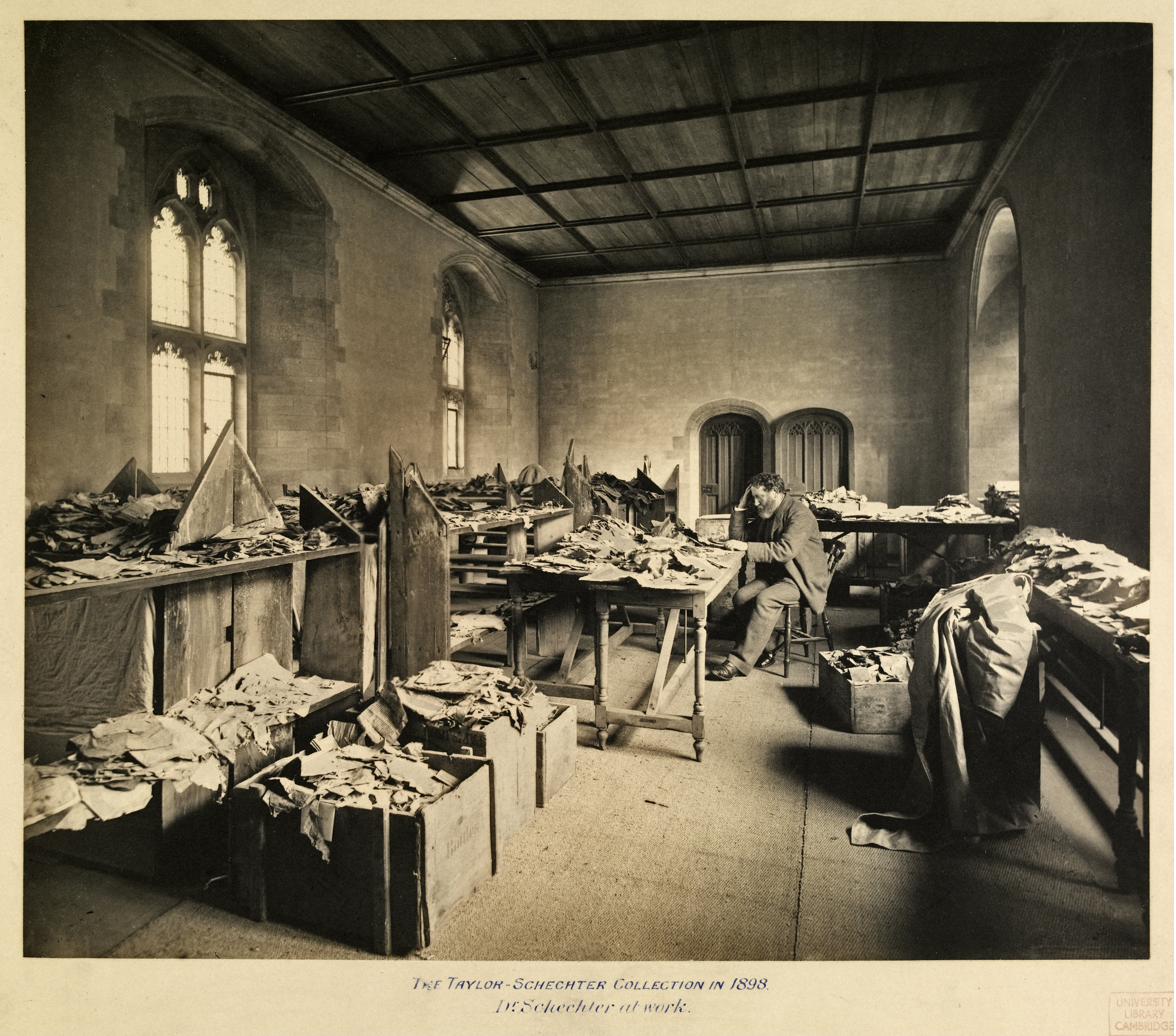
One of the most influential Christian theologians of the Middle Ages read and cited a Jewish one.
Thomas Aquinas, whose Summa Theologica remains foundational for the Catholic Church, cited the Jewish philosopher Maimonides again and again, under the Latin name Rabbi Moyses (Rabbi Moses). The medieval Jewish intellectual world was part of the wider conversation, not walled off from it.
Unit 5 · Jewish Contributions →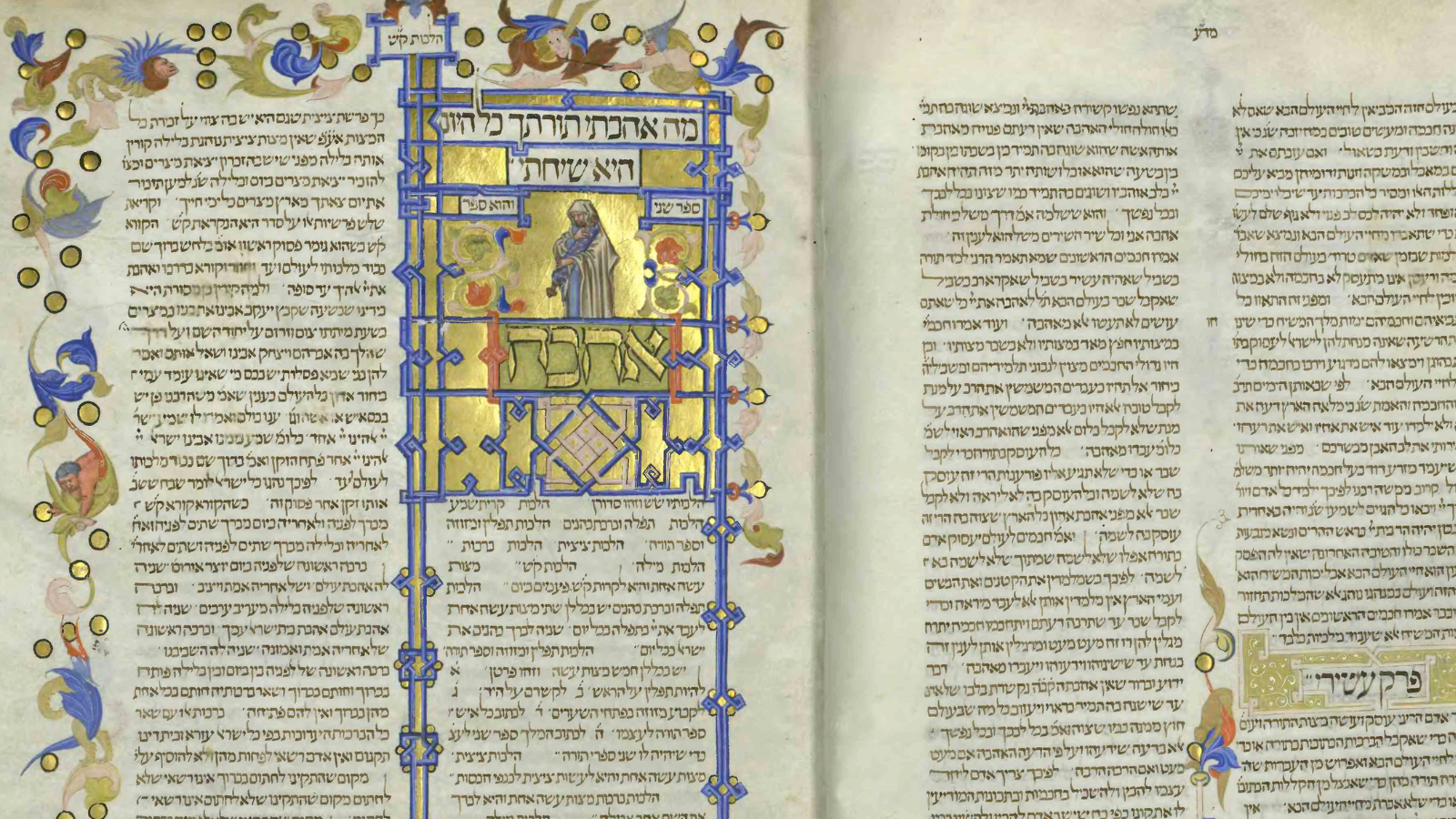
Rome destroyed the Temple and suppressed Jewish political sovereignty, but Jewish presence in the land continued.
In 70 CE Rome destroyed the Temple in Jerusalem, the moment later cast as the end of Jewish life in the land. But the community never disappeared: Tiberias, Safed, the Ottoman towns. The record runs century by century, at the level the sources support.
Chapter · The Continuous Jewish Presence →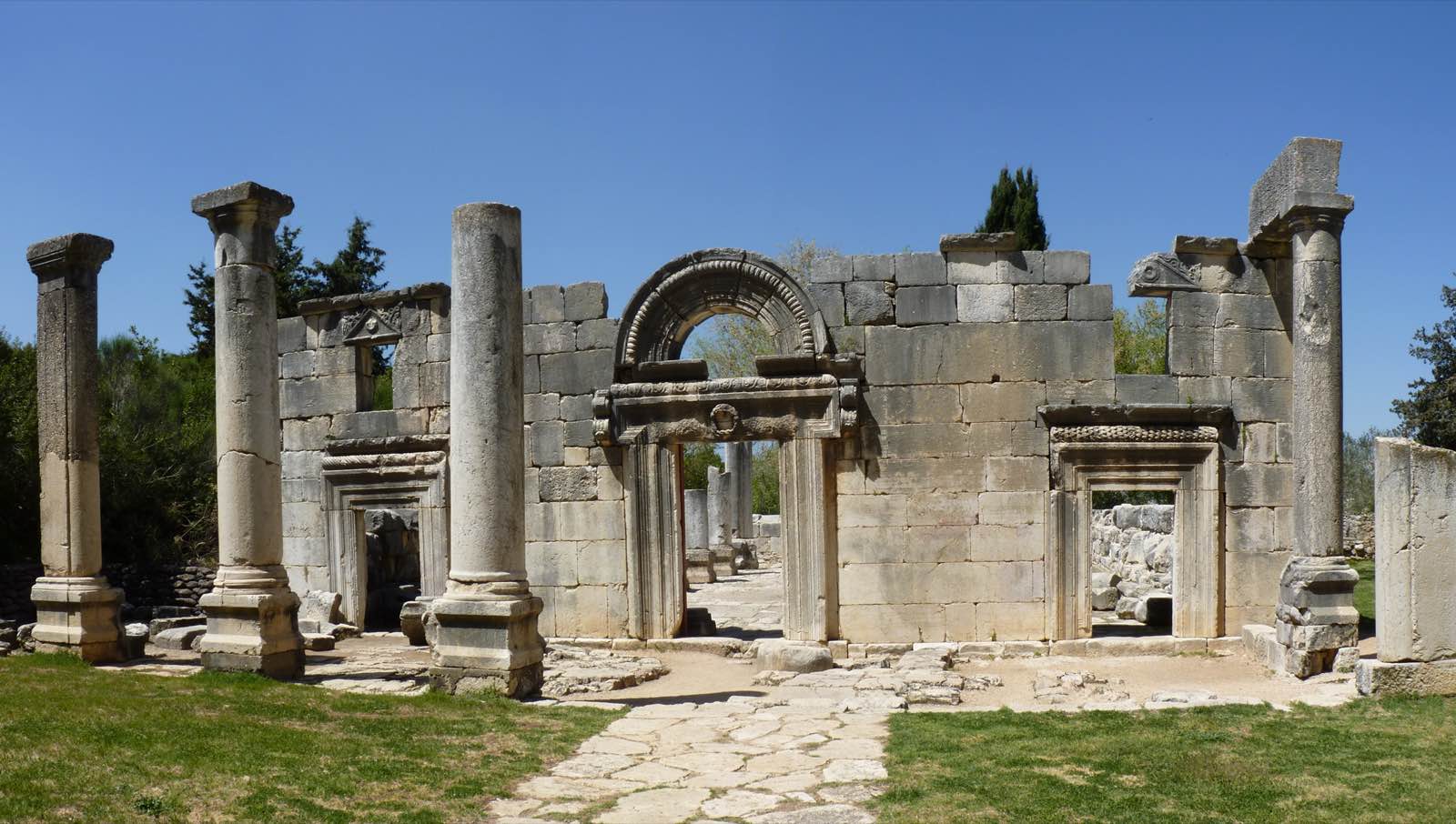
In 1965, the Catholic Church set aside the deicide accusation.
For roughly 1,800 years, the teaching called Adversus Judaeos held Jews collectively guilty for the death of Jesus, the deicide charge, and helped license persecution across Europe. In 1965 the Second Vatican Council adopted Nostra Aetate, by a vote of 2,221 to 88, formally setting that charge aside.
Chapter · Adversus Judaeos →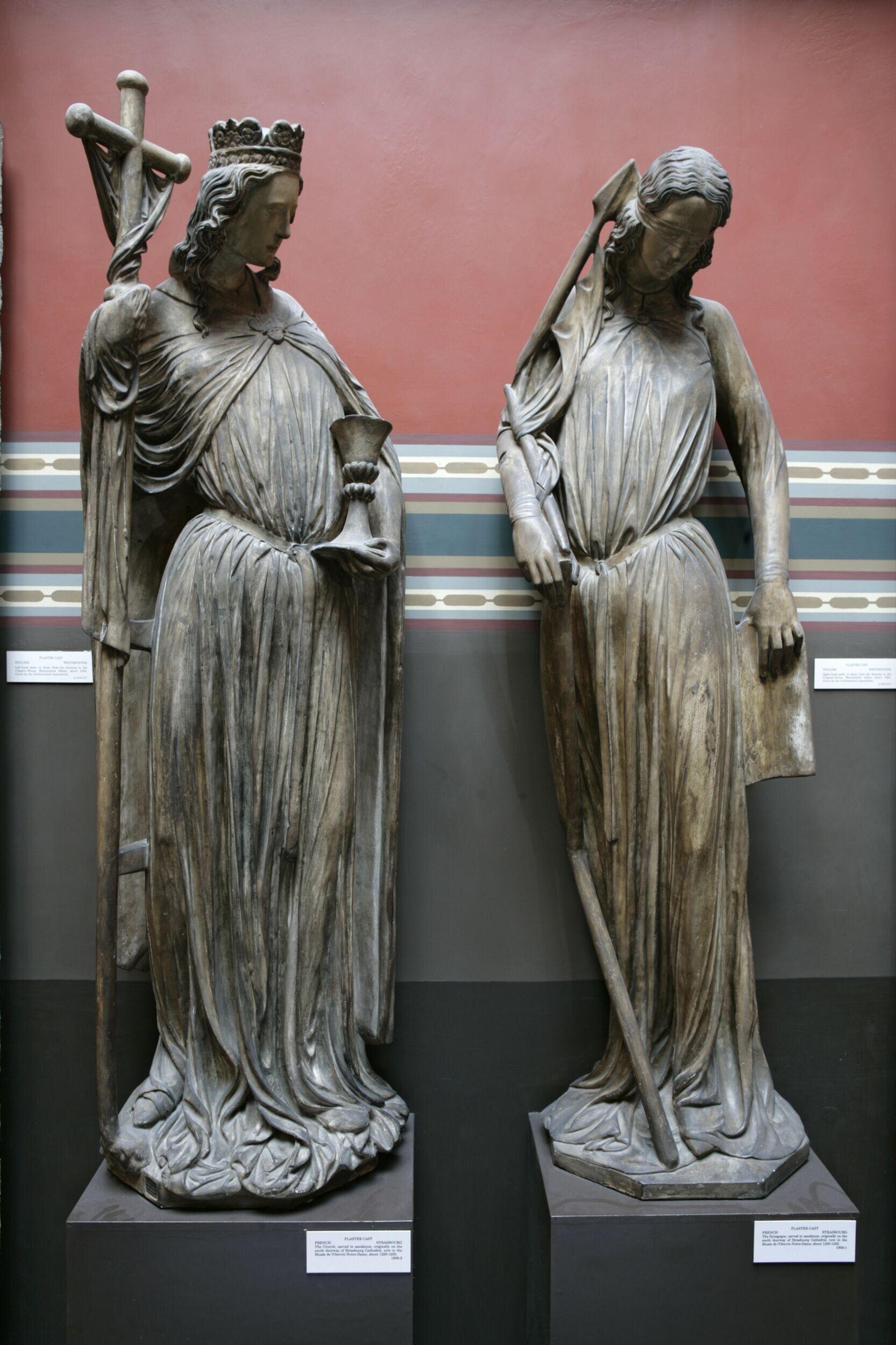
A living civilization, more than 3,000 years on.
Before the dark thread, there is the subject itself: a civilization that has kept its texts, its calendar, and its communities continuous across three millennia and six continents. The same Torah, read on the same Saturday in Yemen, Poland, and Argentina. You cannot understand what the Holocaust tried to end without first meeting what it was aimed at. So the story begins there, with the living world, told through the people who lived it and the documents they left.
Six Units. Read in sequence, or pick the one you need.
Each Unit gathers a set of Chapters. Every Chapter cites its sources, links to the archives and museums that hold the originals, and carries a last-updated date.
The Jewish World
The long civilizational record, sacred texts, the diaspora as a working network, continuous presence in the Land, the synagogue, the Temples.
Unit 2Communities Across the World
The regional histories, the modern State of Israel, the MENA departure, Soviet Jewry, American Jewry, and Ethiopian Jewry.
Unit 3The Evolution of Antisemitism
The long arc: the hostility of the ancient world, Adversus Judaeos, the blood libel, the ghetto system, the 1879 racial turn, the Protocols, and the contemporary record.
Unit 4The Holocaust Era
1933–1939 and the architecture of persecution, Aktion T-4, the ghettos, the camp system, the Einsatzgruppen, the Holocaust in the Middle East and North Africa, resistance and rescue.
Unit 5Jewish Contributions
The civilizational record through the people who shaped it, Rashi, Maimonides, Emma Lazarus, Samuel Gompers, Einstein, and more.
Unit 6Memory, Responsibility, and Today
The postwar reckoning, liberation and the displaced persons, the trials, restitution, the memory architecture, Nostra Aetate, Holocaust denial.
Through the ages, in figures you can check.
Years of Jewish life in the land between the Tigris and the Euphrates, from the Babylonian exile into the twentieth century.
The Jews of Iraq →Jews in Poland and Lithuania in 1764–1765, the largest Jewish community of its time, as historians read the government census taken then.
Poland and Lithuania →Jews among Salonika’s 173,000 people in 1900, nearly half the city.
Spain and the Sephardic World →Jews who left or were forced out of the Arab countries of the Middle East and North Africa, 1945–1972.
The Diaspora →Ethiopian Jews flown to Israel in about 36 hours during Operation Solomon, May 1991.
The Beta Israel →Choose your starting point.
Start with the Jewish world: begin with Unit 1, or take one of the routes below.
Unit 1 · The Jewish World
Begin where the story does (a living civilization, its land, texts, and communities), then follow the six Units in order, built to read like the textbook chapters that are missing.
Enter the Jewish World →Resources & reference
For K–5
Jewish life met through the familiar: holidays, synagogues, geography, and a few people worth knowing. The hard history is held for later grades.
The Curriculum Gap
Why this platform exists. In many textbooks, Jews appear in antiquity, then vanish until the Holocaust, with the centuries before it and the decades after it missing. The site tells the story in between, and after.
Printable Textbook Chapters and Lessons
Every Chapter page prints to PDF, with primary sources, image credits, and standards alignments built in. Alongside them, TJH Originals, “missing chapter” readings and classroom lessons written for this site, fill what textbooks skip.
Virtual Field Trips
Walk through the Tenement Museum, POLIN, the Anne Frank House, the Israel Museum, and more, guided routes into collections around the world.
Misconceptions
Common errors about Jewish history, named and corrected with sources. A quick credibility check for any reader, and a useful classroom exercise.
The Timeline
More than 3,000 years of dated events on a single page, most linked to the Chapter that tells the story. The spine of the whole site.
History connects across centuries, places, and people.
Follow the thread that draws you in.