What this is
Jewish history in K–5 classrooms.
Jews are about two percent of the country's population, concentrated in a handful of metropolitan areas, so many American children never meet a Jewish family. For them, school is where the first encounter happens, and often that first encounter is the Holocaust, in middle school. This page is the introduction that comes before it: a synagogue, a Shabbat table, the holidays, communities around the world, the words and stories a people carries with it. It is the same kind of introduction the early grades already give to other peoples and cultures, given to Jewish life at the same age.
For K–5 classrooms
The six themes.
Six themes, in a natural order. Each one carries a Makor lesson, a shelf of books, and a few outside resources, labeled by what each one is. Built for classrooms. Every lesson also works at a kitchen table with one child, and each words-to-know card ends with a note for families. A scope and sequence lays the nine lessons across a year. Teaching just one? Start with the featured lesson, Where Did the Synagogue Come From? If you teach one, tell us how it went: education@makorproject.org.
Who are the Jewish people?
Jews are a people and a civilization, with a shared history, language, homeland, and culture, not only a religion. Families who look different and live in different countries all belong to one global people. A good first answer to "what is a Jew?" is "a member of a very old people," before it is about belief at all.
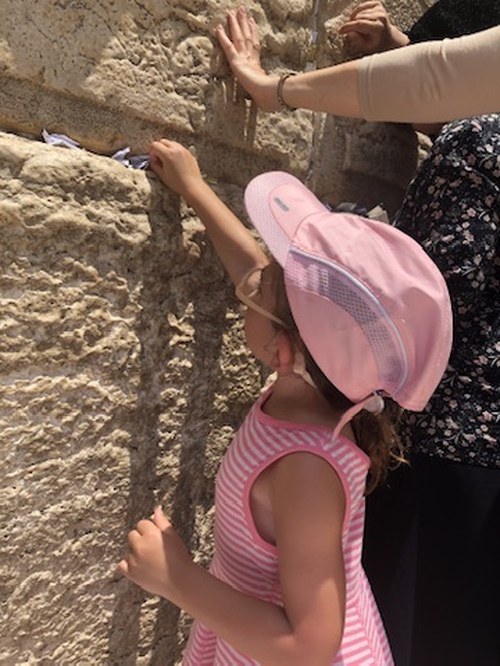
One People, Many Faces
Who are the Jewish people? One very old extended family that lives in many countries and shares a story, a homeland, a language, and holidays. K–2 reads Two New Years and builds a class mosaic; 3–5 reads The Language of Angels and invents words the way Hebrew got its word for bicycle.
One family, two new years: Rosh Hashanah in the fall and Lunar New Year in the winter. A Jewish family that is also Chinese, which is the whole lesson of Theme 1 in one picture book.
Two neighbors, one Jewish and one Muslim, each secretly decide to help the other through a hard year. A friendship story that shows two traditions side by side.
A Jewish boy and a Muslim boy on one Brooklyn street, mistaken for twins, become friends, two kids with more in common than not.
In the 1880s a father decides his son will be the first child in nearly two thousand years to grow up speaking only Hebrew, and invents the words the old language never had, starting with bicycle. The read-aloud for the grades 3–5 track.
Nine-year-old Gittel crosses the ocean alone with her mother’s candlesticks and an address that washes away in her hand. Immigration seen at a child’s eye level, based on a true family story.
For five hundred years a family keeps the key to the house they left in Spain, and keeps their language, Ladino, with it. The true story of a singer who carried both to America.
In the mountains of Kurdistan four hundred years ago, a girl persuades her father to teach her to read, and grows up to lead a house of study in Mosul. A true story, told with its legends kept and labeled as legends.
What is Judaism?
The tradition dimension: the Torah as a handwritten scroll, the synagogue as a gathering place, the rhythm of a week that ends with Shabbat. Taught the way the curriculum already teaches any tradition, through what people do and the places they gather, not doctrine.
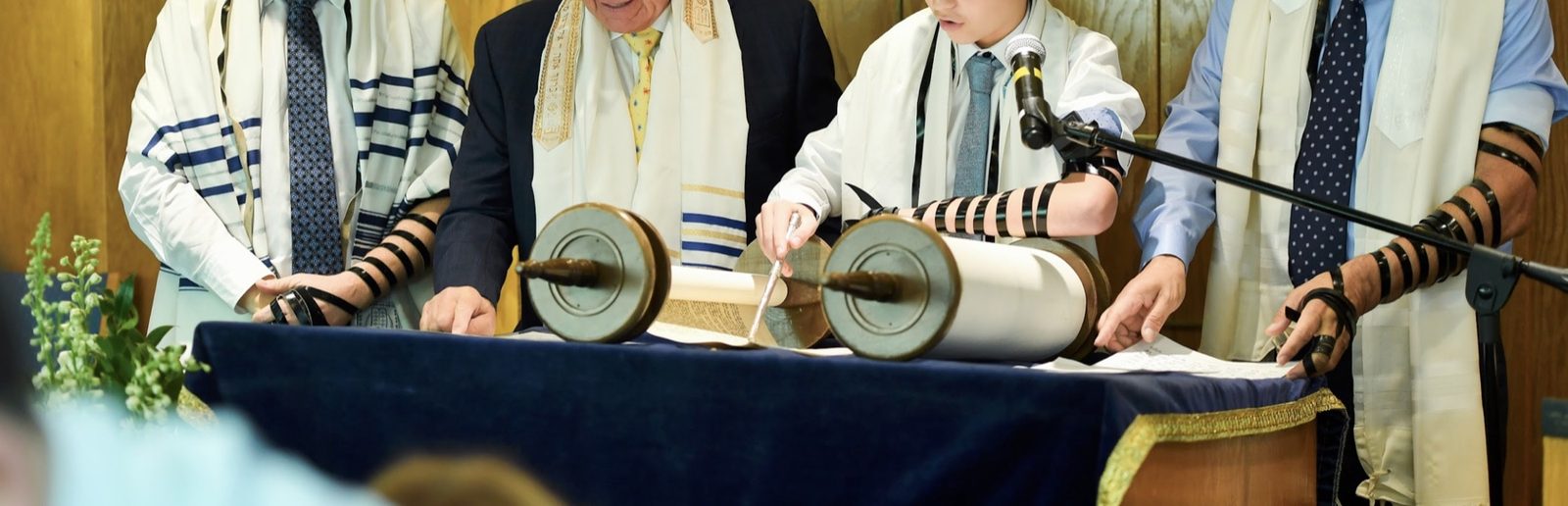
Where Did the Synagogue Come From?
The fullest lesson. It traces how the synagogue became a "portable house of meeting" that let Jewish communities keep their traditions anywhere in the world. It opens with a school that vanishes overnight, and the class ends up working out why a people needed a house of meeting, reading the inside of one, and building a human timeline.
A Shabbat Table
The weekly day of rest, seen through the most familiar setting of all, a family meal. With a covered-basket reveal, a chart of the family meals children already know, and a set-the-Shabbat-table cut-and-glue activity.
- The Eldridge Street Synagogue (New York) · Learn from home ↗
Storytime videos and printable coloring pages from the 1887 synagogue, an excellent companion to "what's inside a synagogue."
- The Israel Museum (Jerusalem) · Family & school programs ↗
Virtual visits to the Shrine of the Book (the Dead Sea Scrolls), the Model of Second Temple Jerusalem, and the Jewish Art and Life Wing of synagogues, Torah arks, and ritual objects from communities worldwide.
- The National Library of Israel · Treasures gallery ↗
High-resolution images of famous Hebrew manuscripts (illuminated Haggadot, early Hebrew printing), good for projecting and for teacher background.
Adam grows from a boy in Russia to a grandfather in America. The shawl his grandfather gave him is repaired piece by piece until nothing original is left, and it is still his. The story of a people that changes and stays itself. Set around a prayer shawl, so preview for your setting.
On Saturdays Goldie Simcha’s cholent fills the whole building with its smell, until the week she is too sick to cook and every neighbor shows up with a dish of their own. A Shabbat story about a whole building.
From dawn on Friday to the first stars on Saturday night, one Shabbat in a Jewish village in the Ethiopian highlands. The same day of rest, kept in a place most readers have never imagined it.
A family welcomes Shabbat in two languages at once, Ladino and Hebrew. For the youngest listeners: the sound of a five-hundred-year-old Jewish language, still at the table.
What do they believe and celebrate?
Best taught as what a child can see and mark: the holidays across the year (Rosh Hashanah, Hanukkah, Passover, Purim) and the values lived through action: feeding the hungry, welcoming guests, caring for the sick, repairing the world. Values first, holidays beside them: both are visible in a classroom before a single belief needs explaining.
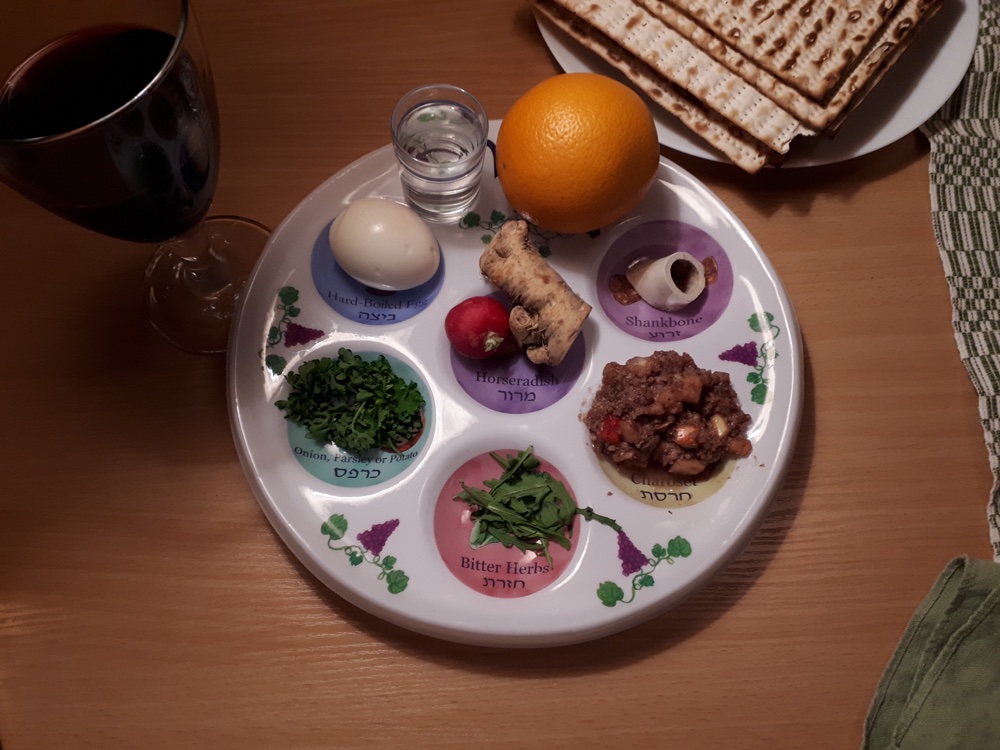
The Jewish Year
A year of Jewish holidays told through what families do. It opens with an apple and a honey bear and a guess (what holiday is this for?), then a Holiday Match card game and a wheel of the year each child builds into a spinner.
- PJ Library on YouTube ↗
Read-aloud videos of published PJ Library titles, holiday explainers, and music videos. Public channel, no signup.
- Shalom Sesame (Sesame Workshop) ↗
Sesame Workshop's Jewish-content series: holidays, Hebrew basics, and life in Israel, with Grover. Preview first.
A story built on a Valley Forge legend: General Washington meets a Polish-Jewish soldier lighting a menorah in the winter camp and listens as the soldier explains Hanukkah. The American-history hook makes it a natural fit in any Revolution unit.
Bubba Brayna, whose eyes are not what they were, serves her famous latkes to a very hungry visitor she takes for the rabbi. A food story that makes children laugh out loud.
A Jewish community in rural Uganda builds its harvest huts, and a girl learns what makes one the best. On the Texas commission’s recommended list for introducing Jewish identity.
When Passover ends, Miriam helps her grandmother prepare Mimouna, the Moroccan open-house night, and a Muslim neighbor brings the first flour for the sweets. The holiday’s neighborliness is the story itself.
In 1950s Iran, Ezra and Roza race through their town to replace the family’s spoiled matzah before the seder. Passover as Iranian Jewish families kept it, with the market, the neighbors, and the table in full color.
A family’s seder cannot end until the lost afikoman is found, and a time-traveling goat leads a boy back through the seders of the past, from Roman Judea to the Warsaw Ghetto. A graphic novel for confident readers, the whole long story told at one table.
Jewish communities around the world.
Jewish families have lived in Iraq, Yemen, Morocco, Ethiopia, India, Spain, Poland, and the United States, each with its own foods, music, and dress. Seeing that range shows children one people spread across the whole world, not a single image.
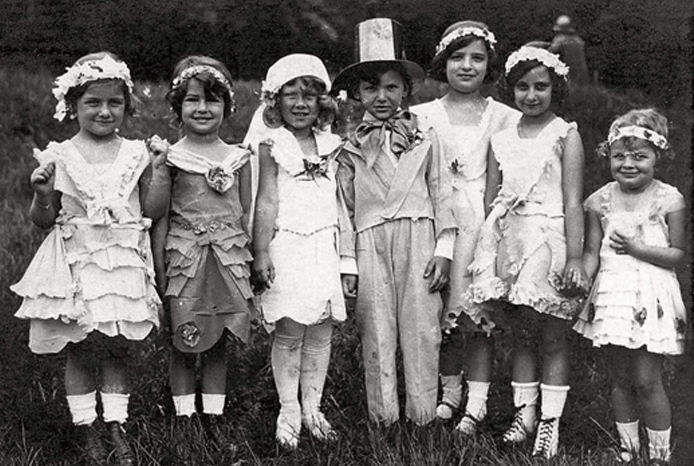
Jewish Communities Around the World
One people, many homes. It opens with a photograph of a synagogue on a Caribbean island with a floor of sand. Then eight communities, from Iraq to Ethiopia to Curaçao, go onto a world map, and pairs pack "What They Carried" cards, foods, music, and languages, into each one's suitcase.
Three Voices, One Country
A letter, a poem, and a song. It opens with a sealed envelope: a letter the President wrote in 1790, and the class guesses who it was to (a synagogue in Newport). Students decode Washington's "to bigotry no sanction" sentence word by word, read the last five lines of Emma Lazarus's poem in a round and write what the Statue would say to a family arriving today, then place Lillian Wald's 1893 Henry Street, Carl Laemmle's 1915 movie studio, Irving Berlin's 1918 song, Albert Einstein's 1940 citizenship, and their own voice on one timeline across the room. Fits May, Jewish American Heritage Month.
- ANU · Museum of the Jewish People (Tel Aviv) ↗
Image-rich online galleries of Jewish life across centuries and continents (Iraqi, Yemenite, Ethiopian, Indian, European, American), good for projecting.
- The Tenement Museum (New York) · Virtual Field Trips ↗
Live, educator-led visits into the restored apartments at 97 and 103 Orchard Street, where Jewish, Irish, Italian, and German immigrant families lived. Lower-elementary sessions focus on family stories. Upper-elementary sessions add primary-source documents. Reduced rate for Title I schools.
- POLIN Museum of the History of Polish Jews (Warsaw) ↗
A virtual tour of the reconstructed painted wooden ceiling of the Gwoździec synagogue (rebuilt at POLIN by more than 300 experts and volunteers), plus family and school resources.
A quilt made from the clothing of a Russian-Jewish family arriving in America passes from mother to daughter across four generations, becoming a Sabbath tablecloth, a wedding canopy, a baby blanket. On the widely adopted Wit & Wisdom Grade 3 core-texts list.
The Lower East Side in 1912, five sisters, and a year of family life across the Jewish calendar. The book assumes a reader who knows nothing about Jewish life. Mama and Papa explain each custom within the story, so the reader learns alongside the girls.
When Baghdad’s Jews are allowed to leave for Israel with one suitcase each, Shoham’s grandmother finds a way to carry what matters. The 1951 airlift, told at a child’s height through one family and one gold bangle.
Stories, foods, music, and words.
The lived culture a child can taste, hear, and say: folktales, challah and latkes, klezmer and Sephardi song, and the Hebrew and Yiddish words that have entered English. A sensory doorway the youngest students can walk through.
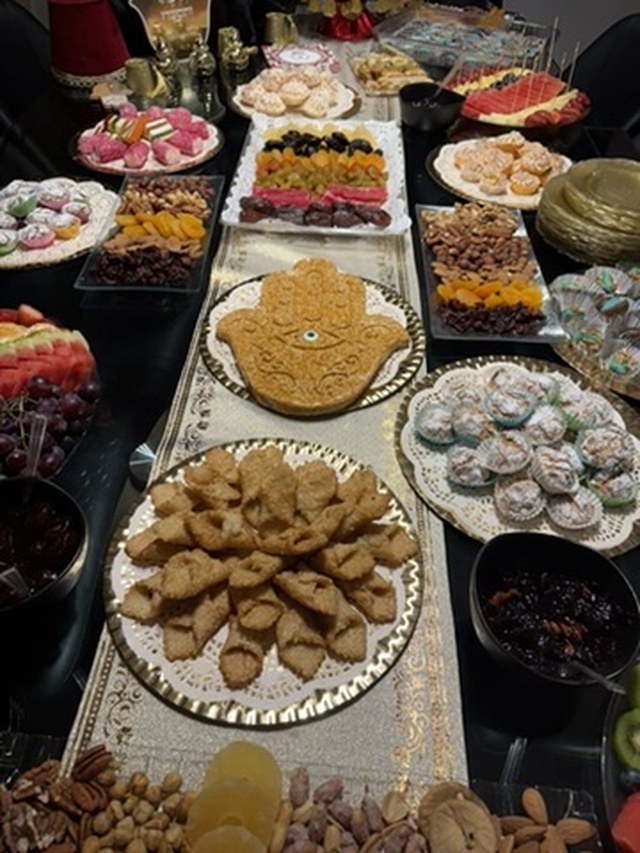
Stories, Foods, and Words
The theme a child can say, make, and act. Three stations the class rotates through: a stand-up game with English words that came from Yiddish and Hebrew (you already speak some), a challah braided in play-dough, and a Yiddish folktale about a very crowded house, acted out on a taped square of floor.
Your Name in Hebrew Letters
An alphabet lesson, the kind a class runs for Chinese characters or Arabic script. Twenty-two letters, written right to left, introduced through a photograph of two scribes at work and then traced. Then each child writes their own name in them and the class reads its scroll the Hebrew way.
- BimBam animated shorts ↗
Three-to-six-minute Hebrew Bible retellings (Noah, Joseph, Moses, David), holiday explainers, and a Judaism 101 series.
- PJ Library Music ↗
A free collection of Jewish music for kids, organized by holiday and theme.
- Itzhak Perlman · In the Fiddler's House
An accessible recording for introducing klezmer, Perlman with four leading klezmer ensembles (EMI Classics, 1995). Widely available on standard streaming services.
A poor man’s hut is so crowded and noisy that he begs the wise man for help, and is told to bring the chickens inside. The folktale the Station 3 group acts out, at every grade.
Based on a Yiddish folk song: Joseph turns a worn overcoat into ever-smaller items (a jacket, a vest, a button) until the moral lands: you can always make something out of nothing. A cumulative read-aloud with die-cut pages.
Three relatives visit every Sunday and answer everything with "Oy," "Feh," and "So?" until the children stage a rescue. The Yiddish-words picture book, built for performing.
When Zaida can’t fetch the Sunday bagels, Eli learns to make them himself. Comes with a glossary of the Yiddish words in the story.
A beggar arrives in a village where nobody shares, and makes soup from bone buttons, one donated ingredient at a time. The Stone Soup story told in a Yiddish village.
A prince decides he is a rooster and lives under the table until a wise old man joins him there. A two-hundred-year-old Jewish tale about how you really change someone’s mind.
A shah slips out of his palace in disguise and meets a poor Jewish shoemaker who trusts that all will turn out just as it should. An Afghan Jewish folktale that tests that trust one hard day at a time.
How Jewish people try to live.
Mitzvot (good deeds that are also commandments), tzedakah (giving as a kind of justice rather than charity), chesed (kindness no one can repay), and tikkun olam (the idea that the world is ours to help repair). Many of these (feeding the hungry, welcoming guests, caring for the sick) are values children meet in other traditions too, which makes them a natural place to begin: a familiar idea in an unfamiliar community.
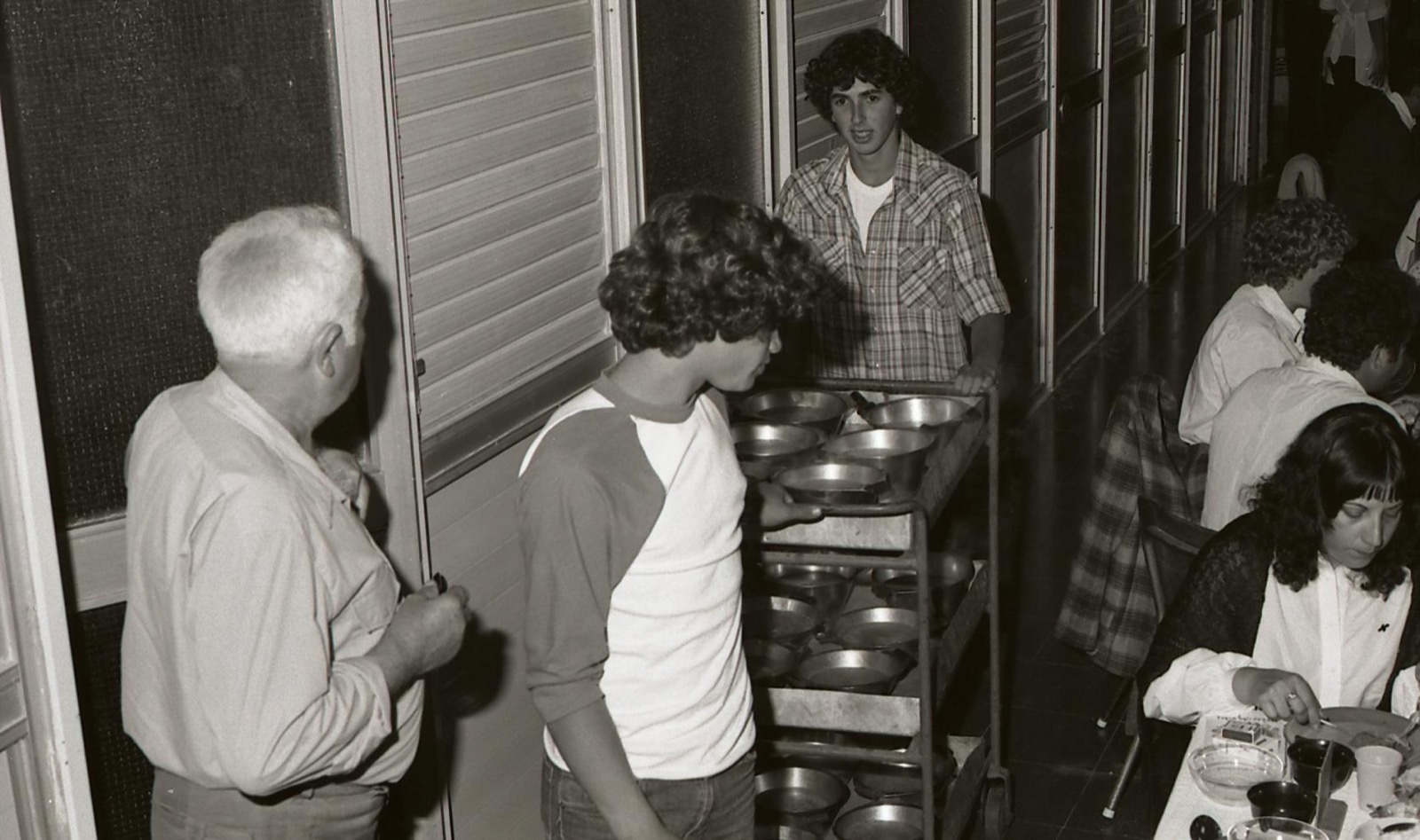
Doing Good: Jewish Values
A coin and a vote: is giving nice, or fair? The reversal (tzedakah comes from the word for justice), then freeze-frame tableaux the class guesses, and a tree of paper leaves, one act of kindness each, beside the values other traditions teach.
- The Anne Frank House (Amsterdam) · The Secret Annex Online ↗
An interactive 3D tour of the Secret Annex. The museum itself recommends visits for ages 10 and up. Preview first and consult the museum's teaching guide. Many teachers hold it for grade 5 or middle school.
Three of them are set in the Holocaust years and belong to the rescue-story end of the band, each told through rescue or resistance, never the camps. The fourth reaches back to medieval Spain. Preview with your own historical context.
In Nazi-occupied Denmark, a young girl helps her family hide a Jewish mother and son until a boat can carry them to Sweden, and on a moonless night, the whole town whispers directions door to door to guide them to the harbor. A gentle first introduction to rescue.
Based on a real incident in WWII Warsaw: a girl who has escaped the ghetto helps resistance fighters smuggle food back inside, releasing feral cats to distract the Gestapo's dogs at the train station. A taut survival story in spare free verse.
The 1943 rescue of Denmark's Jews, told through ten-year-old Annemarie as her family hides her best friend Ellen.
In medieval Spain, Samuel, the vizier’s son, must make sure that Hamza, who insulted him, never says a mean word again. He puzzles over punishments and lands on the old answer: he makes a friend. Drawn from a tale told of the real poet and statesman Samuel HaNagid.
Developmental appropriateness
What belongs at this age, and what does not.
This program introduces Jewish life, history, and culture first. The Holocaust itself is not the subject here. The United States Holocaust Memorial Museum gears its own teaching materials to grade six and above, and the state commissions whose guidance reaches the early grades start with foundations rather than the history itself. Where the Holocaust does reach the upper elementary grades, through the rescue and resistance stories under Theme 6 above, the entry point is people helping people, never the camps. The rest of this page is what comes before that history, and it gives that history ground to stand on.
What the state commissions say about the early grades
Roughly twenty-nine states now require Holocaust education, most of it in middle and high school. Several reach the elementary grades in different ways: New Jersey requires instruction K–12 by statute, Illinois requires an elementary-school unit (elementary in Illinois law means K–8), Oregon's standards reach the elementary years, and Texas requires age-appropriate instruction in all grades during its Holocaust Remembrance Week. Several states keep a standing commission that writes the guidance teachers use, among them the New Jersey Commission on Holocaust Education, the Illinois Holocaust and Genocide Commission, and the Texas Holocaust, Genocide, and Antisemitism Advisory Commission. For the early grades their guidance starts with age-appropriate foundations, understanding difference, prejudice, and respect, rather than the history of the atrocities.
The Texas commission also says what those foundations should include, listing "Introducing Jewish Identity/Judaism" among its elementary themes, in its own words: "This way, when Holocaust instruction occurs in the upper grades, it is not the students' first introduction to Jews or Judaism. This is key to making sure that students do not perceive Jewish identity solely through the lens of victimization."
The state-by-state record, with what each law asks for, is on the State Mandates page.
Teaching about a tradition in a public school
Public schools teach about religion the way they teach about any part of a community’s life: as history and culture, not as practice. The Supreme Court drew that line in 1963, in the same decision that ended school-sponsored Bible reading and prayer: “Nothing we have said here indicates that such study of the Bible or of religion, when presented objectively as part of a secular program of education, may not be effected consistently with the First Amendment” (Abington School District v. Schempp). The working rule, from the First Amendment Center’s teacher’s guide: the approach is academic, not devotional. The aim is awareness, not acceptance. The class studies a tradition and does not practice one. The lessons on this page are built that way. A Shabbat table is set and described, never blessed. A holiday is explained, never observed. Describe, don’t instruct.
For upper elementary and up · separate from the core unit
When symbols and hate enter the classroom.
Some teachers find that incidents involving hate symbols (drawn on bathroom walls, on lockers, on social media) start appearing in their schools as early as upper elementary. For this teaching moment, the Anti-Defamation League has built these materials for decades. The six themes above are the foundation. For incident response and hate-symbol education, the ADL's materials are the ones to use.
ADL · Incident Response Resources for K–12 Schools. A hub of grade-banded lessons and strategies, including When Hateful Symbols Cause Hurt and Harm (elementary and middle school), Words That Can Hurt, Help, and Heal, and A Guide for Responding to School-Based Bias Incidents. Teachers can pick the lesson that fits their grade band and the specific incident.
The core K–5 unit above is about who Jewish people are. This section is about what to do when something else happens.
Trusted classroom resources
Where teachers already go.
The Makor Project does not duplicate the strong K–5 materials that established institutions already provide. Three more belong on any K–5 teacher's list, beyond the ones named under the themes above.
Institute for Curriculum Services (ICS)
Free, standards-aligned K–12 lessons on Judaism and ancient Israel, including the "3 B's" comparative-religion framework. C3-aligned.
icsresources.org ↗PBS LearningMedia
Free standards-aligned video and lesson resources, including world-religions and culture materials suitable for elementary classrooms.
pbslearningmedia.org ↗Holocaust Museum Houston · Young Upstanders
For upper-elementary themes of community, kindness, and standing up to bullying, a state-recommended toolkit with K–2 and 3–5 lessons. (HMH describes it as bringing lessons of the Holocaust to elementary students in an age-appropriate way. Preview for fit.)
hmh.org · Young Upstanders ↗For virtual visits students can take from the classroom (historic synagogues, museums, and archaeological sites) see the Virtual Field Trips page, which includes K–5-appropriate tours.
- Library of Congress · Classroom Materials ↗
Primary-source sets with teacher guides, including material on Eastern European Jewish immigration. Common Core and state-standards aligned.
- Smithsonian Learning Lab ↗
Six million digital resources across the Smithsonian's museums. Search "Jewish" for image-filled, curriculum-aligned material on Jewish American history, immigration, and world cultures.
- Britannica Kids ↗
The familiar elementary reference in school and library subscriptions, with an age-appropriate Jewish-content article suite (Judaism, Torah, Rosh Hashana, and more) for student research and teacher background.
- PBS LearningMedia · Judaism (Access World Religions) ↗
A free collection covering Judaism alongside other world religions, the comparative-religions framing the standard K–5 social-studies curriculum already uses.
- PJ Library · book catalog & resources ↗
The PJ Library website is fully public: any teacher can use its holiday explainers, read-aloud videos, recipes, and book catalog (by topic, age, and holiday) without signing up. The most useful public bibliography for K–5 Jewish content.
- Jewish American Heritage Month · Educator Resources ↗
The Weitzman National Museum's K–12 lesson hub, filterable by grade band and topic: the American Revolution, immigration, civic participation. Strong for American Jewish history.
- Texas (THGAAC) · Recommended K–5 Lesson Plans ↗
The advisory commission's portal of recommended resources, open to any teacher. Includes Holocaust Museum Houston's Young Upstanders Toolkit and other approved K–5 plans, some reaching into upper-elementary Holocaust content. Preview for fit.
- Yad Vashem · age-appropriate Holocaust pedagogy ↗
Essential reading for any teacher whose students will meet this history in the upper grades. Yad Vashem’s educators set out the principles: lead with empathy, not history, use only true stories, never use simulations, end every lesson with closure, and keep parents and administrators informed.
- My Jewish Learning ↗
An online encyclopedia of Jewish life, history, and holidays, a good place to read up on a concept before teaching it.
Standards & how it fits
Where this fits the curriculum you already teach.
None of this asks for new instructional time. It fits the space K–5 social studies already gives to world cultures, communities, and traditions. The six themes map to the elementary frameworks most states use, with New York’s K–8 Social Studies Framework as the worked example:
- World cultures & communities (Makor Themes 1, 2, and 4): NCSS Theme 1, Culture, and Theme 3, People, Places, and Environments. New York K.2 (“Children, families, and communities exhibit cultural similarities and differences”), 1.1b (families of “diverse racial, religious, national, and ethnic groups share their beliefs, customs, and traditions, which creates a multicultural community”), 2.2 (“People share similarities and differences with others in their own community and with other communities”), and 3.5 (“Communities share cultural similarities and differences across the world”). C3 Framework D2.Geo.2.K-2 and D2.Geo.2.3-5 (maps and photographs to describe places), D2.Civ.10.K-2 and D2.Civ.10.3-5 (comparing points of view).
- Comparative traditions (Makor Themes 2, 3, and 6): New York 3.4 (“Each community or culture has a unique history, including heroic figures, traditions, and holidays”). Jewish practice is set beside the other traditions a class already studies, using the belief–behavior–belonging frame. C3 D2.Civ.14.K-2 (“Describe how people have tried to improve their communities over time”) for the values theme.
- Common Core ELA (every Makor theme, especially 5): RL.K–5.1 and RI.K–5.1 (asking and answering questions about a text), RL.2.2 and RL.3.2 (recounting stories, including folktales from diverse cultures), SL.K–5.1 (collaborative conversation), and L.K–5.4 (vocabulary), delivered through the books, read-alouds, and words-to-know cards above.
- Time, continuity & change (Makor Themes 1 and 4): NCSS Theme 2. C3 D2.His.1.K-2 (“Create a chronological sequence of multiple events”), D2.His.2.K-2 and D2.His.2.3-5 (comparing life in the past to life today), D2.His.3.K-2 and D2.His.3.3-5 (questions about the people who shaped historical change). New York 4.7 (“Many people have immigrated and migrated to New York State contributing to its cultural growth and development”) for the American-communities strand.
New Jersey, Illinois, Oregon, and Texas teachers will find the same strands in their own frameworks. The state mandates themselves are on Standards & Mandates.
If you teach K–5 and have a lesson, read-aloud, or activity that has worked in your classroom, we welcome it: write to editor@makorproject.org.
✉ Share the K–5 program with your school
Teaching grades 6–8? Makor for Middle School is the companion guide.