Levi Strauss
Look around any classroom and someone is wearing his invention. A pair of blue jeans is so ordinary that it seems to have no history at all. It has one. It begins with a Jewish family leaving Bavaria, runs through a tailor’s letter and a patent, and ends, for now, behind museum glass in Washington and New York.
Levi Strauss, 1829–1902, and the pants the whole world wears
Why this Chapter exists
The most ordinary object in the room.
This Unit measures contribution, and most of its Chapters measure it in ideas: a commentary, a philosophy, a vaccine. This Chapter measures it in cloth. Blue jeans are worn on every continent, by nearly every kind of person, for every kind of work and none. An object that common is easy to look past. Looked at closely, it documents an immigration, an invention, a partnership between two Jewish immigrants, and a habit of giving that outlived them both. Historians call this kind of reading material culture, history told through things. This page reads one pair of pants.
1829–1853
Leaving Bavaria.
Levi Strauss was born Loeb Strauss on February 26, 1829, in Buttenheim, a village in Bavaria, then an independent German-speaking kingdom and today a state in southern Germany. His father was a Jewish dry-goods peddler (a peddler sells small goods door to door). Bavaria in those years limited where Jews could live, what work they could do, and even how many could marry: a registry called the Matrikel capped the number of Jewish households each town was allowed. For a peddler’s younger son, the arithmetic was plain. There was no place on the list for him.
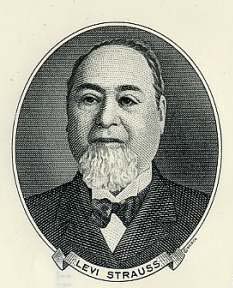
His father died of tuberculosis in 1846. Two years later Loeb, his mother, and two of his sisters sailed for New York, where two older half-brothers had a dry-goods firm. Loeb became Levi, and a peddler like his father. In January 1853 he became an American citizen, and weeks later he sailed for San Francisco, by way of Panama, to open the family’s West Coast branch. The city was four years into the Gold Rush, the rush of prospectors that followed the 1848 discovery of gold in California. Strauss did not dig for gold. He sold dry goods, workwear, and fabric to the people who did, and his wholesale house, later Levi Strauss & Co., grew as the city grew.
1872–1873
A tailor’s letter.
Jacob Davis was a tailor in Reno, Nevada, a Jewish immigrant from Riga, in the Russian Empire, and one of Strauss’s fabric customers. Working men kept bringing him the same complaint: pockets tore. Around 1870 Davis began hammering copper rivets, the small metal fasteners used in harness work, into the corners of the pockets he sewed, and the pants stopped tearing. He wanted a patent, the legal right that gives an inventor sole control of an invention for a term of years. The filing cost was about sixty-eight dollars, well over a month of a workingman’s wages, and Davis did not have it.
So in 1872 he wrote to his fabric supplier in San Francisco and offered a deal: pay the fees, and share the rights. Strauss said yes. No copy of the letter survives, the company’s early records burned in the 1906 earthquake and fire, but the arrangement it produced is spelled out in the patent itself. United States Patent No. 139,121, an “Improvement in Fastening Pocket-Openings,” was granted on May 20, 1873, in Davis’s name and held jointly with Levi Strauss & Company. Davis moved to San Francisco to run the manufacturing. What they made, riveted “waist overalls” in blue denim (a hard-wearing cotton cloth) and in brown cotton duck, is the direct ancestor of every blue jean made since. The rivet, not the cloth, was the invention. The lot number the company gave its top grade in 1890, 501, is still on the patch today.
1873–1902
What he did with it.
Strauss ran the company for the rest of his life, and San Francisco came to treat him as an institution. He never married; he lived near his sisters’ families, and the firm stayed a family firm. He was a member of Congregation Emanu-El, a synagogue founded in the Gold Rush years, and his giving ran across every line the city had: to the Pacific Hebrew Orphan Asylum, and to Catholic and Protestant orphanages as well.
In 1897 he endowed twenty-eight scholarships at the University of California, Berkeley, for students from across the state. When he died in San Francisco on September 26, 1902, the city’s merchants closed their doors for his funeral. His estate went to his nephews and to the city’s charities. The scholarship fund he endowed at Berkeley has carried his name for more than a century, tuition paid out of a peddler’s profits.
Object Spotlight
A patent that is also a pair of pants.
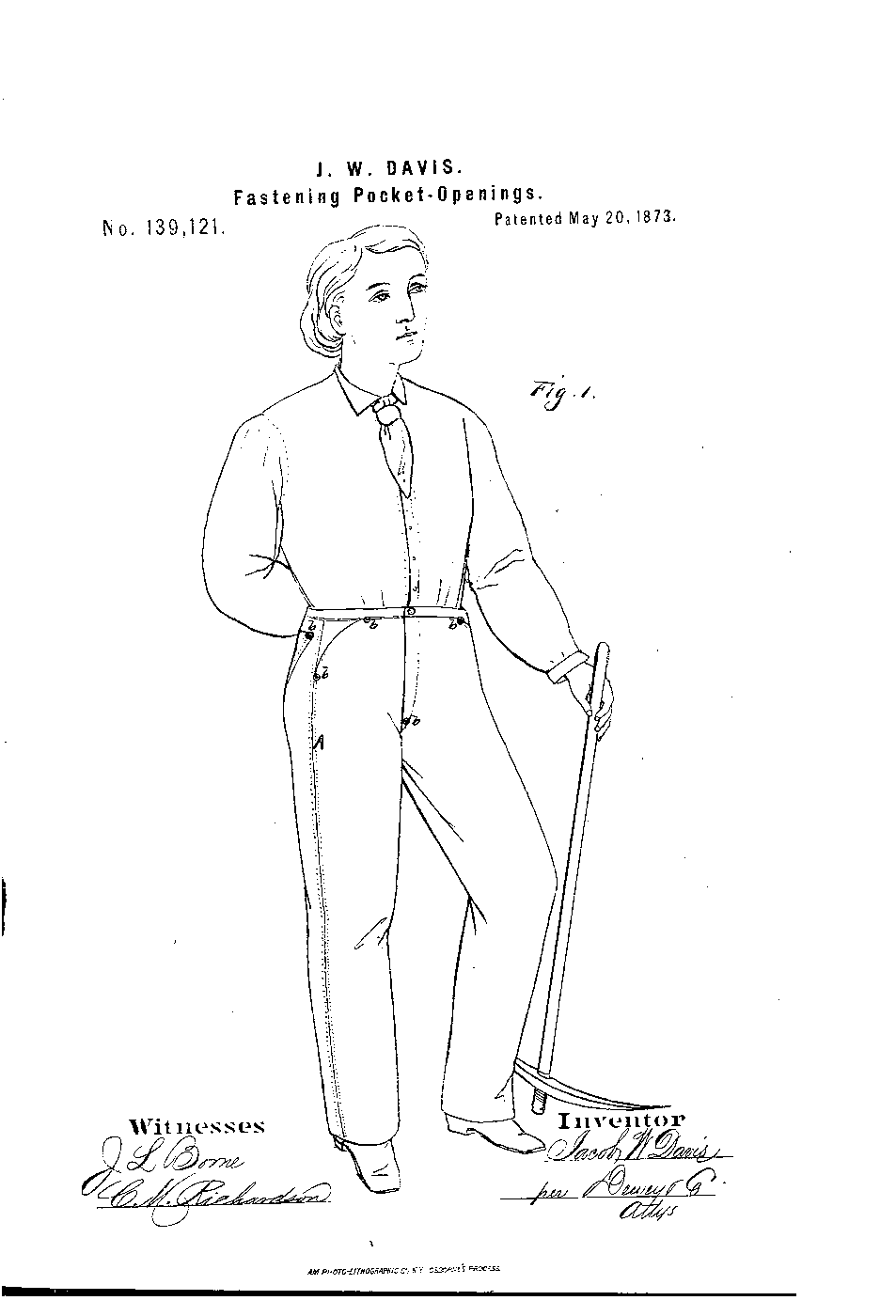
The drawing shows a working man in his new trousers, a pick in his hand, the rivet points marked at the pocket corners. The text page beside it opens with a line that settles the story in government type: “Jacob W. Davis, of Reno, Nevada, assignor to himself and Levi Strauss & Company, of San Francisco, California.” Two Jewish immigrants, one from Riga and one from Bavaria, an inventor and the firm that backed him, named together on a federal document in 1873.
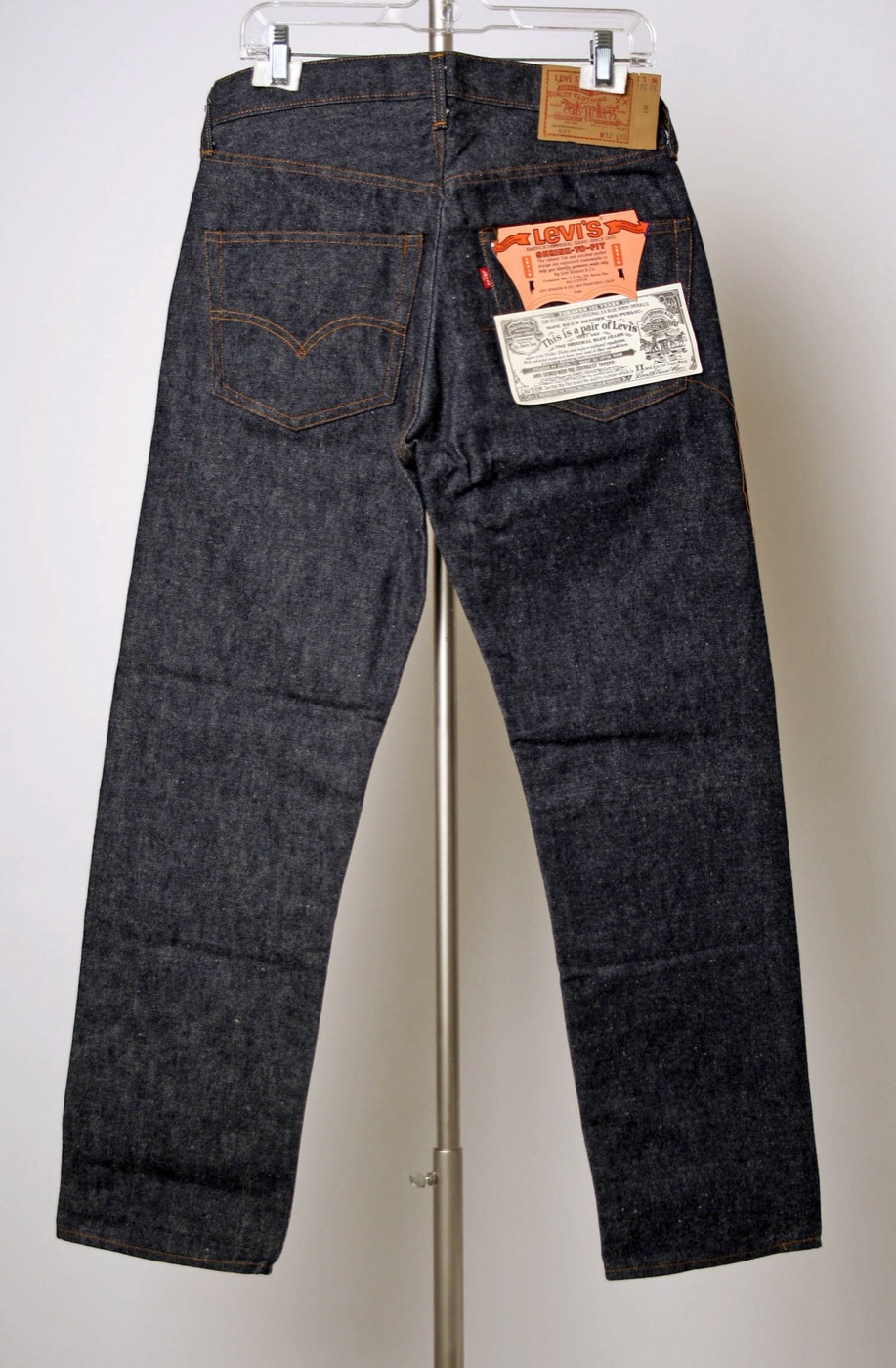
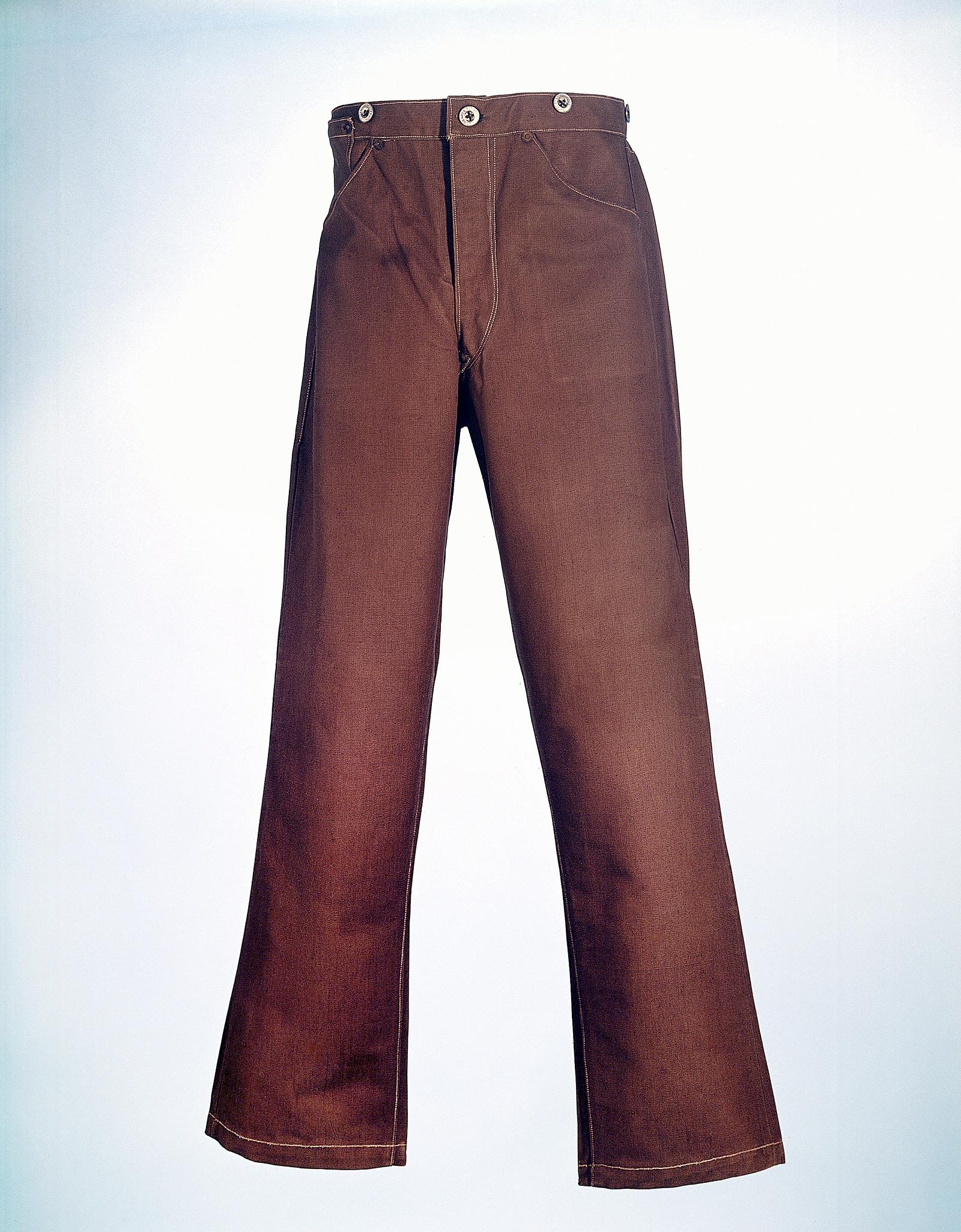
Objects carry history the way documents do, and sometimes they end where documents end: in a museum. One of the oldest known pairs is in Washington, at the Smithsonian’s National Museum of American History: brown cotton duck, made in San Francisco between 1873 and 1896, in the patent’s own era. Every copper rivet on it is stamped “L. S. & CO. S. F. PAT. MAY 1873.” The printed label at the back waistband names Levi Strauss & Co. of 14 and 16 Battery Street, San Francisco, promises “Every Pair Guaranteed,” and adds a warning: “Any infringement on this Patent will be prosecuted to the fullest extent of the law.” Read those two sentences together. They tell you the pants were selling, and that others were copying them.
The pants have a second museum address. In 1978 the company gave pairs of its jeans to the Costume Institute of the Metropolitan Museum of Art in New York. The back label of one of them, stamped with the two-horse trademark and the same patent date, is the banner image at the top of this page.
The analytical question
What can a pair of pants prove?
Every claim here traces to a record: a birth register in Buttenheim, a citizenship file in New York, a patent in Washington, an endowment at Berkeley, an obituary in a San Francisco newspaper, accession cards at the Smithsonian and the Met. That method, applied to the least solemn object imaginable, teaches something worth keeping. History is not only in treaties and battles. It is in the seams of ordinary things, waiting for someone to ask where they came from.
Key takeaways
- Levi Strauss (1829–1902) was born Loeb Strauss in Buttenheim, Bavaria, where the Matrikel registry capped the number of Jewish households; he emigrated to New York in 1848 and opened the family firm’s San Francisco branch in 1853.
- The blue jean began with Jacob Davis, a Jewish tailor in Reno who riveted pocket corners and could not afford the patent fee; Strauss paid it, and Patent No. 139,121 was granted May 20, 1873, held jointly by the two immigrants.
- Strauss never married and gave across religious lines, to Jewish, Catholic, and Protestant orphanages alike; the scholarship fund he endowed at Berkeley in 1897, twenty-eight scholarships at its founding, has carried his name for more than a century.
- One of the oldest known pairs, in brown cotton duck with every rivet stamped “PAT. MAY 1873,” is at the Smithsonian’s National Museum of American History. The Metropolitan Museum of Art keeps pairs the company gave in 1978; the back label of one is this page’s banner.
Discussion questions
Working from the evidence.
Grounded in the sourced record above.
- Bavaria’s Matrikel capped how many Jewish households a town could hold. Trace the chain from that registry to a garment now worn all over the world. Which links in the chain were choices, and which were forced?
- The patent names Davis as inventor and Strauss as the partner who paid the fee. Using only the patent’s own words, how should the credit for the blue jean be divided?
- The patent drawing shows a working man holding a pick, not a fashion plate. Who did Davis and Strauss think their customer was, and when did that change?
- Strauss gave to Jewish, Catholic, and Protestant orphanages alike. What does giving across religious lines say about how he understood his place in San Francisco?
- The label on the oldest surviving pair promises “Every Pair Guaranteed” and warns that any copier of the patent will be prosecuted. What do those two printed sentences tell you about how the pants were selling, and about who was copying them?
Classroom Connections
Where this Chapter fits.
Teaching Connections
The disciplines and courses this Chapter naturally supports, for any educator, anywhere.
- US History: immigration, the Gold Rush, and the settlement of the American West through one merchant’s arc.
- Economics & Innovation: the patent system, the partnership between an inventor and a financier, and how a workwear item became a global product.
- Primary-Source Analysis: Patent No. 139,121 as a document students can read line by line, drawing and text together.
- Material Culture: reading history from an object, the method this Chapter models and the site’s Museum extends.
- Jewish History: the Bavarian emigration of the 1840s–1850s, alongside the American Jewry Chapter and the commerce field of Across the Fields.
Standards Alignment
- NYS US History & Government: 11.5 (industrialization, immigration, and the American West).
- Common Core ELA-Literacy: RH.6–8.7 and RH.11–12.7 (integrating visual and textual information, here the patent’s drawing and claims).
Further Teaching Resources
- United States Patent No. 139,121, the full original document, free to read.
- The Metropolitan Museum of Art, object record for the jeans in the Costume Institute.
- Levi Strauss: A Biography by Lynn Downey, the company’s longtime historian, on the company’s own site. A short, readable PDF.
Sources and citations
Primary sources
A primary source is a record from the time. It was made by people who were there. Examples: letters, diaries, photos, decrees, trial records, and newspapers.
- Davis, Jacob W. United States Patent No. 139,121, “Improvement in Fastening Pocket-Openings,” granted May 20, 1873. patents.google.com.
- Davis, Jacob W. Letter to Levi Strauss & Co., 1872. The company’s early records were lost in the 1906 San Francisco earthquake and fire; the letter and its offer are documented in Downey, below.
- Obituary of Levi Strauss. San Francisco Call, September 27, 1902. California Digital Newspaper Collection.
- The Smithsonian’s National Museum of American History. Levi’s brown duck trousers, 1873–1896, gift of Walter Haas, Jr. si.edu.
- The Metropolitan Museum of Art. Trousers, Levi Strauss & Co., accession 1978.175.3, gift of Levi Strauss & Co., 1978. metmuseum.org.
Secondary sources
A secondary source was written later. It is a book or article by a historian who studied those records and explains what they mean.
- Downey, Lynn. Levi Strauss: The Man Who Gave Blue Jeans to the World. Amherst: University of Massachusetts Press, 2016.
- Diner, Hasia R. Roads Taken: The Great Jewish Migrations to the New World and the Peddlers Who Forged the Way. New Haven: Yale University Press, 2015.
Emma Lazarus (1849–1887): the American poet who answered the Russian pogroms with fourteen lines at the base of the Statue of Liberty, and gave immigration its welcome.
Comments?
Write to editor@makorproject.org.
Last updated: September 2026.