Moses Mendelssohn
In 1743, a poor fourteen-year-old student of the Talmud, the central text of Jewish law, walked into Berlin, a city where Jews arriving paid a special toll on their persons. Forty years later he was one of the best-known philosophers in Europe, the man his contemporaries called the German Socrates. He spent his life on a question Jews still debate: can a person belong fully to the Jewish people and fully to the modern world at once?
Moses Mendelssohn, 1729–1786, and the Haskalah
Why this Chapter exists
Between traditional Jewish life and the modern world.
Moses Mendelssohn (1729–1786) became a celebrated figure of the European Enlightenment, the eighteenth-century movement that put reason and open debate above inherited authority, and he remained an observant Jew. The movement that formed around him, the Haskalah, or Jewish Enlightenment, raised questions modern Jews still debate: language, citizenship, education, and how much of the surrounding culture to take in.
He also helped open the emancipation debates, the argument over whether Jews could and should become equal citizens of European states. That argument ran across Europe for a century.
1729–1763
From Dessau to the Berlin Academy.
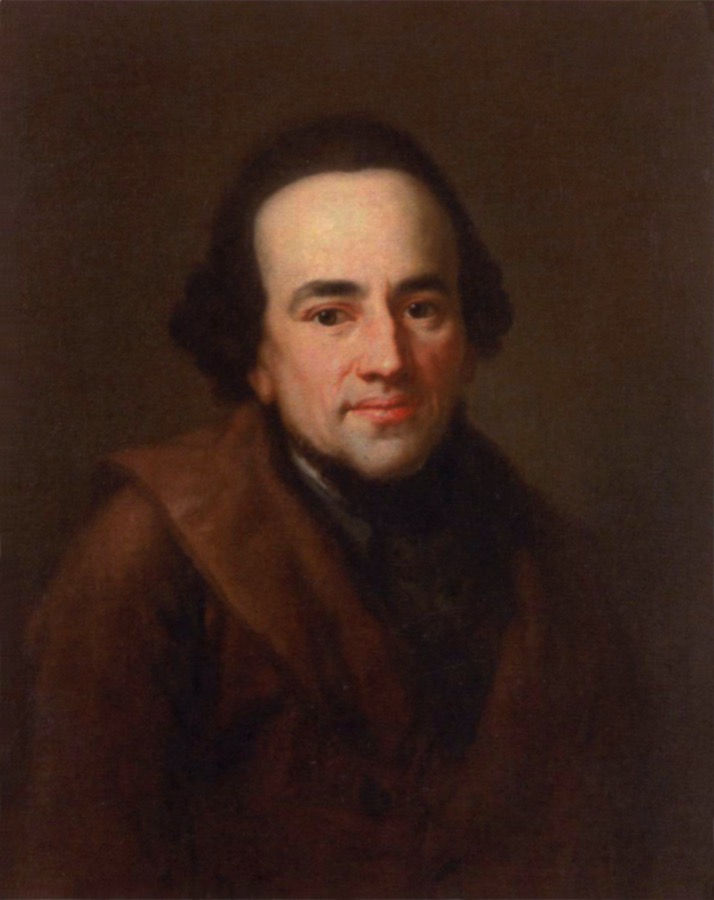
Mendelssohn was born in Dessau in 1729, the son of a Torah scribe. In 1743, at fourteen, he followed his teacher, Rabbi David Fränkel, to Berlin. He was poor and frail and spoke Hebrew and Yiddish, the everyday language of central and eastern European Jews. Berlin was the capital of Prussia, a German kingdom, and it admitted Jews grudgingly. A famous story has a gatekeeper logging his entry alongside livestock. The story cannot be documented, but the Leibzoll (“body toll”), a special charge on Jews entering a city, was real, and Prussia abolished it only in 1787.
The teenager had studied only Bible and Talmud, the central texts of Jewish law. In Berlin he taught himself German, Latin, Greek, French, English, and mathematics. He worked as a tutor and then as a bookkeeper for a silk manufacturer, Isaac Bernhard, the trade that supported him all his life. He wrote philosophy in his spare hours.
In 1763 the Royal Prussian Academy of Sciences in Berlin awarded him first prize in its philosophy essay competition. An essay by the German philosopher Immanuel Kant came second. That same year the king granted Mendelssohn the status of “extraordinary protected Jew,” a personal right of residence in Berlin that did not extend to his wife and children. His Phaedon of 1767, on the immortality of the soul, was widely read and earned him the nickname the German Socrates. In 1771 the Academy elected him a member, and King Frederick II blocked the election. (Stanford Encyclopedia of Philosophy; Jewish Museum Berlin.)
1754–1779
A friendship that became a play.
In 1754 Mendelssohn met the playwright Gotthold Ephraim Lessing, and the two became a famous example of friendship across the Christian-Jewish line. Lessing arranged the publication of Mendelssohn’s first work, and the two argued philosophy together for decades. In 1779 Lessing published his drama Nathan the Wise. Its wise Jewish merchant, widely understood to be modeled on Mendelssohn, answers a trap question about which religion is true with the parable of three identical rings. The Nazi regime banned the play. When the war ended, Nathan the Wise was the play chosen to reopen Berlin’s Deutsches Theater, in September 1945.
1778–1783
The Torah in German, and the argument for the open door.
From 1780 to 1783 Mendelssohn published a translation of the Torah, the first five books of the Hebrew Bible, into German, printed in Hebrew letters. It came with a Hebrew commentary, the Bi’ur (“explanation”), which he planned and partly wrote. Collaborators, including Solomon Dubno and Naphtali Herz Wessely, wrote the rest. A Jewish reader who learned Torah from it also learned standard German, the language of the universities and the professions. Some traditional authorities opposed the work and banned it, though other traditional rabbis were among its subscribers. The circle of the Haskalah around Mendelssohn welcomed it.
In 1783 he also published Jerusalem, or On Religious Power and Judaism, his answer to a public challenge of 1782. In an anonymous pamphlet, the writer August Friedrich Cranz demanded to know how Mendelssohn could reject religious coercion yet hold to a revealed law. An earlier public demand had come in 1769, when the Swiss pastor Johann Caspar Lavater (Moritz Oppenheim’s 1856 painting in the banner imagines him at Mendelssohn’s table) challenged him to refute Christianity or convert. Mendelssohn answered that challenge in 1770. Jerusalem argues two ideas at once. The state has no business coercing anyone’s conscience. Judaism, it holds, is a religion of revealed law, not of compelled belief, and so is compatible with reason and citizenship. In 1781, two years before Jerusalem, at Mendelssohn’s prompting, the Prussian official Christian Wilhelm von Dohm had published an influential treatise arguing for Jewish civil equality. Dohm also wrote of “making the Jews better men and useful citizens” and urged moving them from trade into crafts and farming. That idea of Jewish “improvement” ran through the debates that followed. (Leo Baeck Institute; Deutsche Biographie, on Dohm.)
After 1786
What the door let in, both ways.
Mendelssohn died in Berlin on January 4, 1786, observant to the end and famous across Europe. Within a generation, four of his six surviving children had left Judaism. His grandson Felix Mendelssohn, baptized in childhood, became a leading composer of the nineteenth century as a Christian.
The equality Dohm had argued for arrived country by country, and with conditions. On September 27, 1791, France’s National Assembly made its Jews full citizens, the first European state to do so. In 1806 Napoleon summoned an Assembly of Jewish Notables to Paris with questions about loyalty and French law. In 1807 a “Grand Sanhedrin” of 71 members, named for the ancient Jewish high court, answered that Jews “must regard that country as their fatherland” and that its law governed their civil affairs. In the German states equality came in stages. Several states took rights back after 1815, and equality was complete only in 1871. Alongside it came a new, racial antisemitism that defined Jews by descent, so that baptism did not count. That history is traced in Unit 3. (Encyclopaedia Judaica, “Emancipation”; “Assembly of Jewish Notables”; “Sanhedrin, French”.)
Inside the communities, three religious answers took shape to the question Mendelssohn had opened: how far to enter the surrounding culture, and how far to keep apart. The first was Reform. In Hamburg in 1818 a group of Jews dedicated a Reform temple and soon printed a prayer book of its own, which the city’s rabbinate banned. Reform congregations shortened the service, preached in German, and added a choir and an organ. The movement’s leading thinker, Abraham Geiger (1810–1874), rabbi in Breslau, Frankfurt, and Berlin, argued that Jewish tradition had always worked by “continual further development in accord with the times.” The second was Neo-Orthodoxy. Samson Raphael Hirsch (1808–1888), rabbi of an Orthodox congregation in Frankfurt from 1851, held that Jewish law was binding in full. A Jew could keep it, he taught, while taking part in the general culture of the day. Other congregations in Germany and abroad copied his model. The third stood between them. Zacharias Frankel (1801–1875) called his approach “positive-historical” Judaism: the law stays binding, and it is studied as a law with a history. In 1854 he became the first director of the Jewish Theological Seminary in Breslau (today Wrocław, in Poland), a school for training rabbis. (Encyclopaedia Judaica, “Hamburg”; “Reform Judaism”; “Geiger, Abraham”; “Hirsch, Samson Raphael”; Encyclopedia of Religion, “Frankel, Zacharias”.)
The German-speaking Jews who left for the United States from the 1830s on carried the argument with them. Isaac Mayer Wise, who arrived from Bohemia in 1846, built American Reform from a Cincinnati pulpit, with a union of congregations in 1873 and a school for rabbis, Hebrew Union College, in 1875. In 1886 the founders of the Jewish Theological Seminary in New York took their name from Frankel’s Breslau. Conservative Judaism grew up around it in the next wave of immigration, from Eastern Europe. The Who Are the Jews? Chapter shows where the movements stand among Jews today. (Encyclopaedia Judaica, “Reform Judaism”; Encyclopedia of Religion, “Conservative Judaism”.)
In Germany itself, Jews left the small towns for the large cities over the nineteenth century and moved into commerce, law, medicine, and the press, though in general the universities still barred them from full professorships. By 1933 the community numbered about half a million people, less than one percent of Germany’s population, about a third of them in Berlin, the city Mendelssohn had entered under the body toll. (Encyclopaedia Judaica, “Germany”; USHMM.)
Object Spotlight
A Torah that taught German.
Mendelssohn’s Torah translation with its Bi’ur commentary set German words in Hebrew letters, in a single line of type. The Leo Baeck Institute, the archive of German-speaking Jewry, preserves early editions.
The analytical question
The question he opened.
Should Jews enter the surrounding culture, or keep apart from it? Translate, or preserve? His own century answered with emancipation, some of his own children with baptism, and Reform, Neo-Orthodoxy, and Frankel’s school with three different balances. Theodor Herzl, who reported on the Dreyfus affair in Paris in the 1890s, later called for a Jewish state.
Key takeaways
- Moses Mendelssohn (1729–1786) entered Berlin as a poor Talmud student subject to Prussia’s Jew tax and became a celebrated Enlightenment philosopher, the “German Socrates,” beating Kant for the Berlin Academy’s 1763 prize.
- He became the leading figure of the Haskalah, the Jewish Enlightenment, and his Torah translation, German in Hebrew letters, taught standard German to Jewish readers through the Bible.
- His Jerusalem (1783) argued for freedom of conscience and the separation of religious and state power, and he prompted Dohm’s 1781 treatise, which helped open Europe’s emancipation debates.
- Lessing modeled Nathan the Wise on him. The Nazi regime banned the play, and Berlin’s Deutsches Theater reopened with it in September 1945.
- He remained observant his whole life, while four of his six surviving children left Judaism. His question, how to be fully Jewish and fully modern, drew three answers in Reform, Neo-Orthodoxy, and Frankel’s school, and it is still debated.
Discussion questions
Working from the evidence.
Each question is anchored in a fact this Chapter documents. Answer from the evidence on the page.
- The Bi’ur printed German in Hebrew letters. How does the physical design of that book make an argument, and what did its opponents fear in it?
- Mendelssohn paid a special tax to enter the city that later celebrated him as its Socrates. What does holding those two facts together tell you about his era?
- Jerusalem argues the state must not coerce conscience. Where do you see that idea in founding documents you already know, and what brought a Jewish philosopher in Prussia to argue it?
- Mendelssohn’s question, how to be fully Jewish and fully modern, drew three answers: Reform, Neo-Orthodoxy, and Frankel’s school. How did each answer it, and which crossed to America?
- State Mendelssohn’s question in your own words. Do immigrant families you know face a similar choice between entering the surrounding culture and keeping apart?
Classroom Connections
Where this Chapter fits.
Teaching Connections
- European History: the Enlightenment, religious toleration, and the emancipation debates from Dohm (1781) onward.
- Philosophy & Ethics: Jerusalem on conscience and state power, Phaedon, and the 1763 Academy prize essay.
- Jewish History: the Haskalah as the opening of the modern Jewish condition, bridging Units 2 and 3.
- Literature: Nathan the Wise, the ring parable, and the play’s twentieth-century banning and return.
- Immigration & Identity Studies: the translate-or-preserve question as a common immigrant dilemma.
Standards Alignment
- NYS Global History & Geography: 10.2 (Enlightenment, Revolution, and Nationalism).
- Common Core ELA-Literacy: RH.9–10.4 (meaning of terms like emancipation and toleration in context) and RH.11–12.9 (integrating primary texts with later histories).
Further Teaching Resources
- Stanford Encyclopedia of Philosophy, “Moses Mendelssohn,” the scholarly overview.
- Jewish Museum Berlin, the biography, the legends, and the documents, told at the site of his city.
- German Historical Institute, Dohm’s 1781 text in English.
Sources and citations
Primary sources
A primary source is a record from the time. It was made by people who were there. Examples: letters, diaries, photos, decrees, trial records, and newspapers.
- Mendelssohn, Moses. Sefer Netivot Hashalom (the Bi’ur), German translation of the Pentateuch in Hebrew characters with commentary. Berlin, 1780–83. Editions preserved by the Leo Baeck Institute.
- Mendelssohn, Moses. Jerusalem, or On Religious Power and Judaism. Berlin, 1783.
- Mendelssohn, Moses. Phaedon, or On the Immortality of the Soul. Berlin, 1767.
- Dohm, Christian Wilhelm von. Concerning the Amelioration of the Civil Status of the Jews. Berlin, 1781. English text at the German Historical Institute.
- Lessing, Gotthold Ephraim. Nathan the Wise. 1779.
Secondary sources
A secondary source was written later. It is a book or article by a historian who studied those records and explains what they mean.
- Stanford Encyclopedia of Philosophy. “Moses Mendelssohn.” plato.stanford.edu.
- Jewish Museum Berlin. “Moses Mendelssohn” topic and feature pages. jmberlin.de.
- Deutsche Biographie (Historical Commission, Bavarian Academy of Sciences). Entry on C. W. von Dohm. deutsche-biographie.de.
- “Leibzoll.” Encyclopaedia Judaica, 2nd ed., via Jewish Virtual Library. jewishvirtuallibrary.org.
- Feiner, Shmuel. Moses Mendelssohn: Sage of Modernity. New Haven: Yale University Press, 2010.
- The Magnes Collection of Jewish Art and Life, University of California, Berkeley. “Lavater and Lessing Visit Moses Mendelssohn (1856) by Moritz Daniel Oppenheim.” magnes.berkeley.edu.
- Dinur, Benzion. “Emancipation.” Encyclopaedia Judaica, 2nd ed. (France 1791, the German states after 1815, Austria 1867, the laws of 1869 and 1871.) encyclopedia.com →
- “Assembly of Jewish Notables” and “Sanhedrin, French.” Encyclopaedia Judaica, 2nd ed. (Napoleon’s assemblies of 1806 and 1807 and their answers.) encyclopedia.com → · encyclopedia.com →
- Avneri, Zvi, and Stefan Rohrbacher. “Hamburg.” Encyclopaedia Judaica, 2nd ed. (The Reform temple of 1818 and its prayer book.) encyclopedia.com →
- Kaplan, Dana Evan. “Reform Judaism.” Encyclopaedia Judaica, 2nd ed. (The early reformers’ service, Geiger, Isaac Mayer Wise, the Union of 1873, Hebrew Union College 1875.) encyclopedia.com →
- Heschel, Susannah. “Geiger, Abraham.” Encyclopaedia Judaica, 2nd ed. encyclopedia.com →
- Katz, Simha, and Yehoyada Amir. “Hirsch, Samson (ben) Raphael.” Encyclopaedia Judaica, 2nd ed. encyclopedia.com →
- Schorsch, Ismar. “Frankel, Zacharias.” Encyclopedia of Religion, 2nd ed. encyclopedia.com →
- Nadell, Pamela S. “Conservative Judaism.” Encyclopedia of Religion, 2nd ed. (Frankel as founder, the Jewish Theological Seminary of 1886.) encyclopedia.com →
- “Breslau.” Encyclopaedia Judaica, 2nd ed. (The seminary of 1854.) encyclopedia.com →
- “Germany.” Encyclopaedia Judaica, 2nd ed. (Nineteenth-century urbanization, occupations, and population.) encyclopedia.com →
- United States Holocaust Memorial Museum. “Germany: Jewish Population in 1933.” Holocaust Encyclopedia. encyclopedia.ushmm.org.
Finding these documents: many primary sources are free online. Good places to start are the Fordham Internet Jewish History Sourcebook, Yale’s Avalon Project (law and diplomacy), German History in Documents, the collections of the US Holocaust Memorial Museum and Yad Vashem, the National Library of Israel, and Sefaria (for Jewish texts). Search the document’s name and date.
Levi Strauss (1829–1902): the peddler’s son who left Bavaria for Gold Rush San Francisco and turned a tailor’s letter into the blue jean. His Berkeley scholarships are still paying tuition.
Comments?
Write to editor@teachjewishhistory.org.
Last updated: November 2026.